ST PAUL, Minn. — Two American cardinals and the Vatican’s ambassador to the U.S. denounced the mass deportations in Minnesota under the federal government's immigration crackdown, but they urged everyone to repair strained relations and work together toward humane solutions.
In St. Paul on Friday, Cardinal Robert McElroy of Washington addressed growing concerns with immigration enforcement while highlighting the need to be peacemakers on the polarizing issue after a Mass for migrants he celebrated with his fellow prelates and the Twin Cities' archbishop.
McElroy depicted this winter’s enforcement surge as “almost a siege” that unfolded in “literally the heartland of our country.”
“Catholic teaching supports the nation’s right to control its border and, in these cases, to deport those who’ve been convicted of serious crimes,” he said. “Seeking to deport millions of men and women and children — families who often lived here for decades, many children who don’t know other countries — is contrary to Catholic faith and, more fundamentally, contrary to basic human dignity.”
McElroy joined Cardinal Joseph Tobin of Newark, New Jersey; Cardinal Christophe Pierre, the apostolic nuncio to the United States; Archbishop Bernard Hebda of St. Paul and Minneapolis, and more than two dozen other Catholic bishops for the Mass. A part of their show of solidarity with migrants, the morning service was held in the chapel of the University of St. Thomas, where they were attending a conference.
"I'm very proud, personally, to see our church, you know, be on the side of those who suffer," Pierre said, adding that Pope Leo XIV agreed with the U.S. bishops' support of migrants.
In his homily, Hebda spoke of his anger when migrant communities were too fearful to come to church while " masked men " — a reference to federal law enforcement — roamed the streets and violence erupted during this winter's immigration crackdown in the Twin Cities.
But he encouraged the faithful — including seminarians, members of the college community and school principals packing the pews — to cultivate kindness and focus on peace.
“That ministry of reconciliation has to be ours, in the Twin Cities and around the world,” Hebda preached.
How immigration enforcement unfolded in Minnesota
Minnesota became a global flashpoint of tensions over arrests and deportations. An immigration enforcement surge saw thousands of federal officers in daily confrontations with activists and protesters, two of whom — Renee Good and Alex Pretti, both U.S. citizens — were killed in Minneapolis earlier this year.
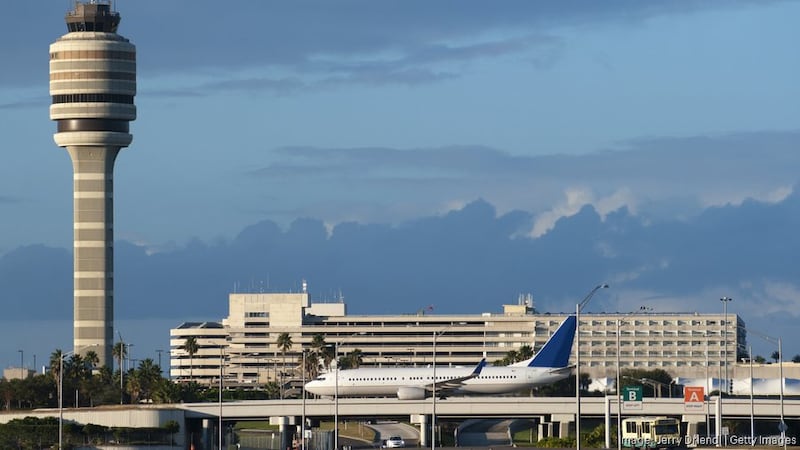
Many faith leaders across denominations joined the protests, including about 100 clergy who were arrested after refusing orders to disperse at Minnesota's largest airport during one of the biggest days of mobilization last month.
The local Catholic leadership, however, struck a more conciliatory tone.
In the immediate aftermath of both fatal shootings, Hebda highlighted the need “to lower the temperature of rhetoric” and “to rid our hearts of the hatreds and prejudices that prevent us from seeing each other as brothers and sisters.” He pointedly noted that held true “for our undocumented neighbors” as much as “for the men and women who have the unenviable responsibility of enforcing our laws.”
Similarly, on Friday, the prelates spoke of praying for everyone who has been affected — from the families of those killed to migrants and those assisting them to “the ICE men and women, too,” in McElroy’s words referring to Immigration and Customs Enforcement agents.
“We all need to engage in healing and reconciliation,” he added. “It will take a long time.”
Politics, faith and immigration views mix in America
Asked whether Catholics — the majority of whom voted for President Donald Trump in 2024 — might see advocacy for migrants as involving the church in politics, the cardinals said religion and politics both should be about the good of society.
The first allegiance is to God alone, Tobin added, but Scriptures exhort more often to do no harm to the foreigner and welcome the stranger than to love one’s neighbor.
“The Creator figured that there was a better chance we’d love people who we thought looked like us. We had to be reminded frequently about everybody else,” Tobin said.
Advocacy for migrants was a priority for the late Pope Francis, who had sparred over U.S. border policies with Trump ever since the latter was first a candidate for the White House a decade ago.
Under Leo, the first U.S. pontiff, the Catholic Church has continued to call for the humane treatment of immigrants around the world and for immigration reform in the United States specifically — something that has eluded Congress for decades.
“The longer we refuse to grapple with this issue in the political arena, the more divisive and violent it becomes,” Hebda had remarked in January.
McElroy and Tobin, alongside Cardinal Blase Cupich of Chicago, recently took to task the Trump administration over morality in foreign policy. In a January statement, they said U.S. military action in Venezuela, threats over Greenland and cuts in foreign aid risked bringing vast suffering instead of peace.
___
Associated Press religion coverage receives support through the AP's collaboration with The Conversation US, with funding from Lilly Endowment Inc. The AP is solely responsible for this content.
Copyright 2026 The Associated Press. All rights reserved. This material may not be published, broadcast, rewritten or redistributed without permission.